In this guide13
Note: Verify every requirement, figure and date against the current regulations before relying on this.
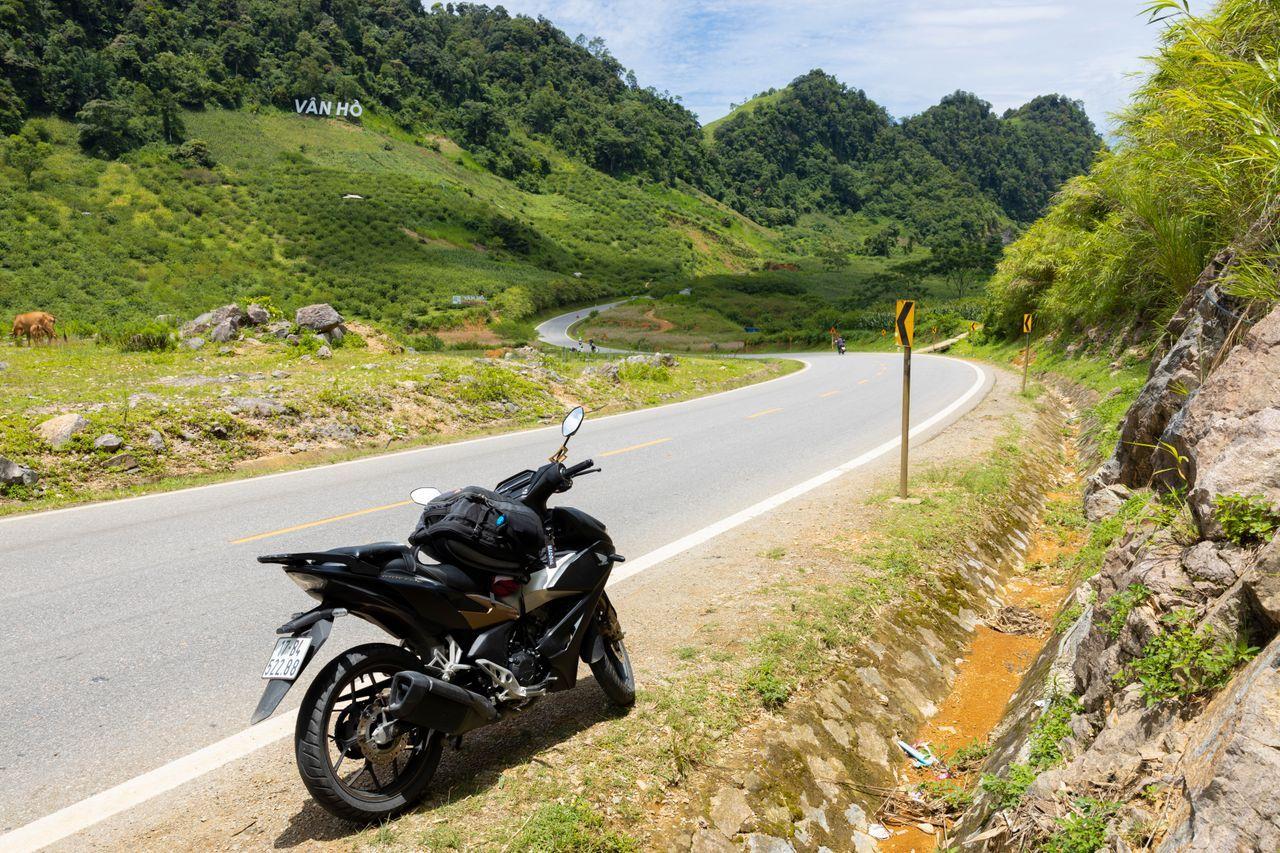
Renting a motorbike is one of the most popular ways to see Vietnam, but riding legally depends on the licence you hold. Get it wrong and you risk fines, a police stop, or an insurance claim that is refused after an accident. This guide covers:
- Who can legally ride in Vietnam
- The 50cc moped exception, which needs no licence
- Which countries are recognised under the Vienna Convention
- What to do if your country is not recognised
- The road rules you must know
- A safety checklist before you ride
- Alternatives for exploring Vietnam by motorbike
Why the rules matter
Many tourists rent a bike without checking the law. Knowing the rules first means:
- You stay within Vietnamese law.
- You stay covered by your travel or medical insurance.
- You can enjoy the trip without unnecessary risk.
Vietnam and the Vienna Convention
The 1968 Vienna Convention on Road Traffic is an international agreement that sets shared driving standards between member countries. Since 2015, Vietnam has recognised International Driving Permits (IDPs) issued under this Convention.
So if your country is a Contracting Party to the Convention and your IDP covers motorcycles, you can ride legally in Vietnam. Vietnam itself joined the Convention in 2014. Alongside IDPs from Convention countries, it also recognises national licences from ASEAN countries under the agreement below.
Who can ride a motorbike in Vietnam?
In short, you can ride a motorbike legally if you are from a 1968 Vienna Convention country and hold a valid IDP, or you are from an ASEAN country and hold your national licence. The one exception is a moped of 50cc or less, which needs no licence at all (see below). Many tourists still rent larger bikes without the right documents, but that is illegal and can invalidate their insurance. If you are not permitted to ride, a good alternative is to travel as a pillion passenger with a licensed easy rider guide.
The 50cc exception: mopeds need no licence
One rule applies to everyone, whatever your nationality. Under Article 56 of the Law on Road Traffic Order and Safety 2024, you do not need a driving licence to ride a moped (xe gắn máy). The law defines a moped as a two- or three-wheeled vehicle with an engine of up to 50 cm3, or an electric motor of up to 4 kW, and a design speed of no more than 50 km/h. That means a tourist whose International Driving Permit is not recognised can still ride one legally. The conditions are:
- You must be at least 16 and know the road rules.
- You must carry the bike's registration certificate and its compulsory civil liability insurance certificate.
- You and any passenger must wear a helmet that meets Vietnamese standards.
The catch is that most rental scooters are bigger. Popular models such as the Honda Vision (110cc) and Air Blade (125cc) count as motorbikes, not mopeds, and need an A1 licence, which covers motorbikes up to 125 cm3 or 11 kW. Check the engine capacity on the registration certificate rather than relying on the shop's description. Riding a motorbike of up to 125cc without a licence carries a fine of VND 2 million to 4 million under Decree 168/2024/ND-CP.
Being legal is not the same as being insured. Many travel insurers require a motorcycle licence from your home country whatever Vietnamese law says, so read your policy wording before you ride.
Pedal-assist e-bikes, whose motor cuts out when you stop pedalling or reach 25 km/h, are treated as bicycles: no licence and no registration, but you still need a helmet.
Riders from Vienna Convention countries
If you are from a 1968 Vienna Convention country such as France, Germany, Italy or the United Kingdom, you may ride in Vietnam when you carry a valid International Driving Permit issued under the treaty. Keep in mind:
- Your IDP must specifically cover motorcycle categories.
- You must also carry your original national licence.
- Without the correct category, you are not legally permitted to ride.
Check that your country and licence class are covered before you travel.
Riders from ASEAN countries
Vietnam is part of the ASEAN Agreement on the Recognition of Domestic Driving Licences, so citizens of ASEAN member states can ride on their national licence without an IDP. ASEAN members are:
- Thailand
- Laos
- Cambodia
- Myanmar
- Singapore
- Malaysia
- Indonesia
- The Philippines
- Brunei
Riders from non-Convention countries (USA, Australia, Canada)
If your country is not part of the Vienna Convention, such as the United States, Australia or Canada, your International Driving Permit is not recognised in Vietnam. Your options are:
- Convert to a Vietnamese licence if you are a resident or long-term visitor.
- Short-term visitors cannot legally ride a motorbike over 50cc unless they obtain this conversion, which means most tourist rentals are technically outside the law. A moped of 50cc or less is the exception, as explained above.
Converting a foreign licence to a Vietnamese one
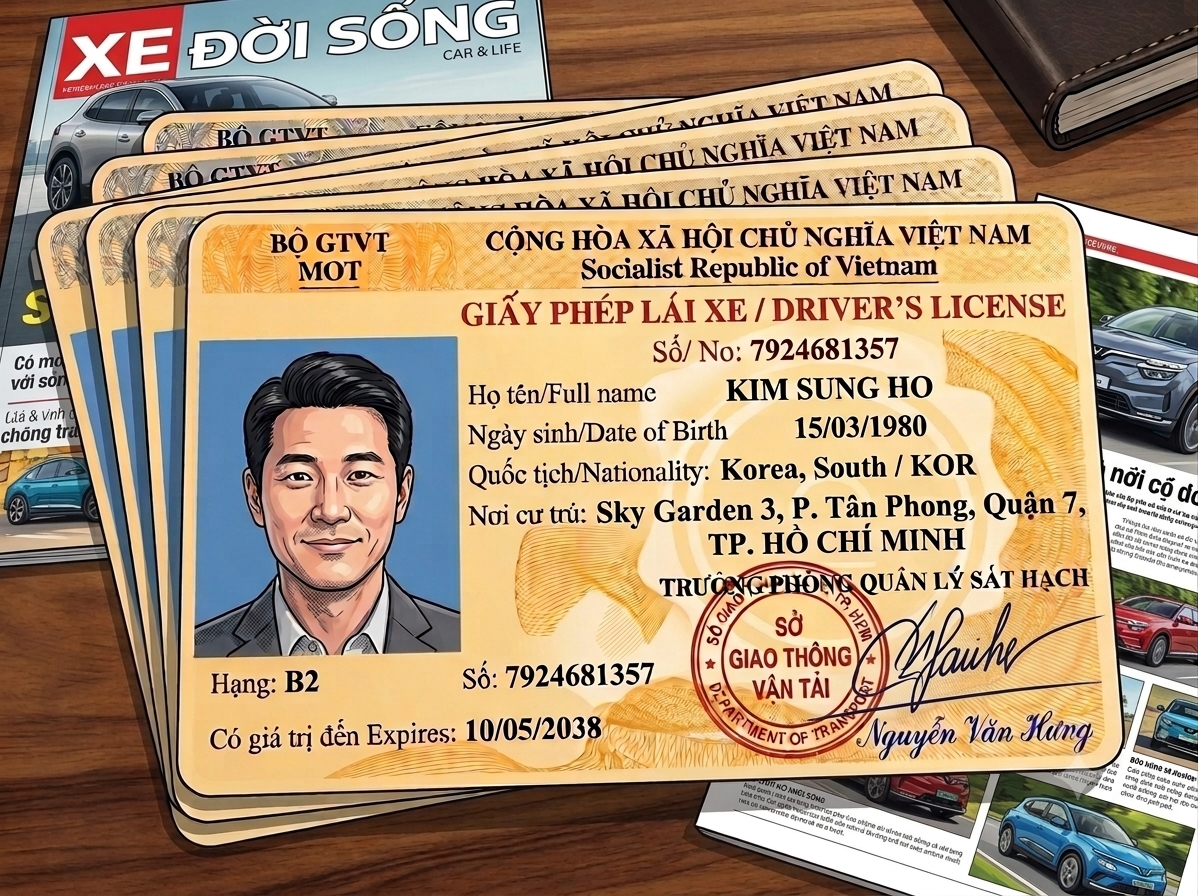
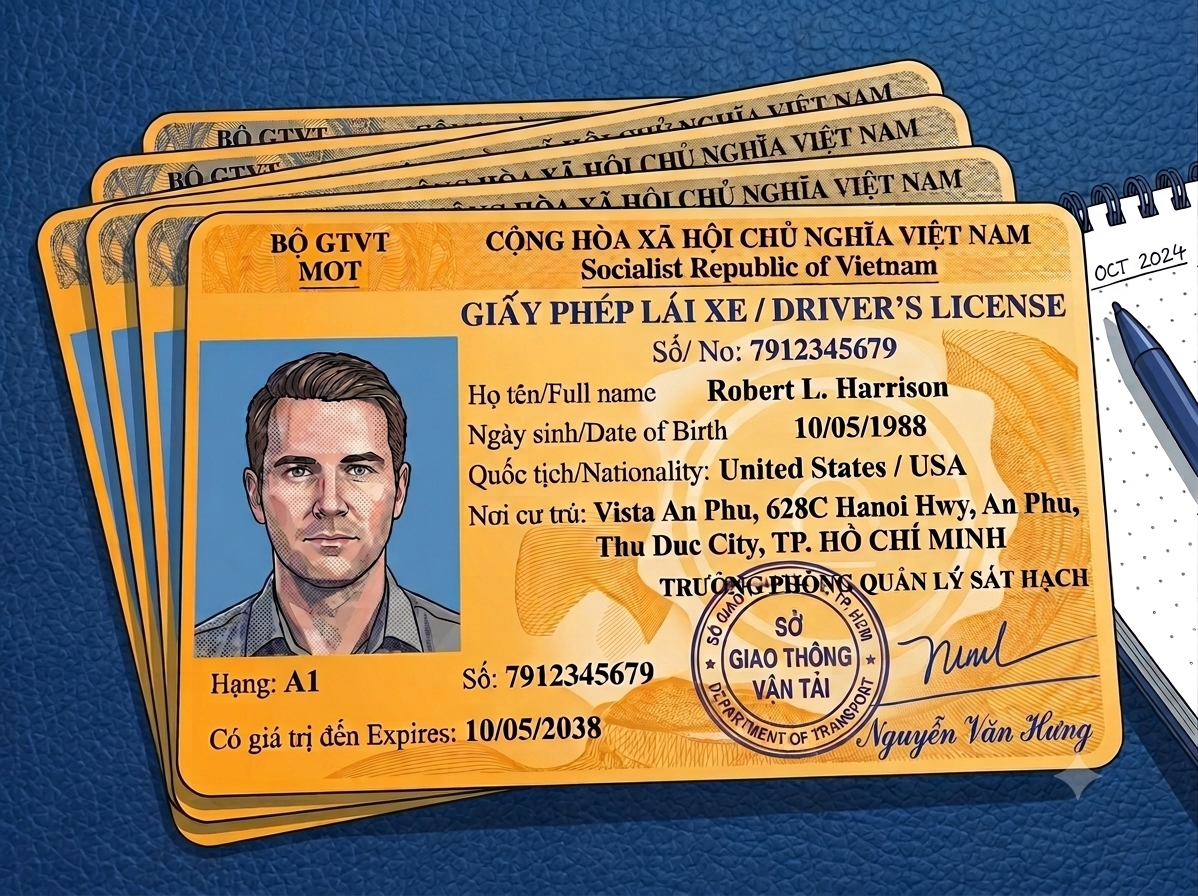
Foreigners living, working or studying in Vietnam with a qualifying visa or residence card can apply to convert a foreign licence into a Vietnamese one. The usual steps are:
- Submit your original licence, passport and residence card.
- Provide a translated and notarised copy of your licence.
- Pay the official fee.
- Your Vietnamese licence is issued for the same vehicle class as your original.
From 1 July 2026 the rules widened. Foreigners residing, working or studying in Vietnam who hold a valid foreign licence and one of the following may apply to exchange it for the corresponding Vietnamese licence (a visa or temporary residence card must have at least 90 days of validity left):
- A diplomatic identity card
- An official identity card
- A visa
- A temporary residence card
- A permanent residence card
Previously you generally needed long-term residence, usually a Temporary Residence Card, and tourist or ordinary e-visa holders were not eligible. Adding visas valid for at least 90 days is a significant expansion, but it does not mean every tourist can now obtain a licence. Applicants must still:
- Hold a valid national driving licence from your home country
- Be residing, working or studying in Vietnam
- Submit the required documents
- Satisfy the administrative requirements for a licence exchange
- Apply for the equivalent licence class
It is an exchange (conversion) of an existing foreign licence, not the issue of a brand new Vietnamese one.
Road rules you must know
Even with the right licence, a few rules are strictly enforced:
- Always wear a helmet when riding. Helmets that meet Vietnamese safety standards are compulsory for the rider and any passenger, and fines are issued on the spot.
- Carry the correct documents. Keep your passport or a copy, your visa, the motorbike registration papers and proof of insurance. Police can ask for them at checkpoints.
- Keep to the right. Vietnam drives on the right; stay right except when overtaking.
- Obey the speed limits. Typical limits are 30 km/h in school zones, 40 to 50 km/h in urban areas, 60 to 80 km/h outside cities, and up to 100 km/h on highways, though most motorbikes are not allowed on expressways.
- Stay off expressways. Motorbikes are banned from expressways and some major highways. Watch for no-motorbike signs at entrances; expressways show as CT roads on Google Maps, and larger-capacity motorbikes are not exempt.
- Never drink and drive. Vietnam has a zero-tolerance alcohol policy for riders. Even a small amount can mean heavy fines and possible licence suspension.
- Use lights and indicators. Signal when turning or changing lanes. Headlights must be on between 6:00 pm and 6:00 am, and sometimes in tunnels during the day.
- Carry only legal loads. You may carry one adult passenger plus a child. Larger loads or extra passengers are prohibited and often stopped.
- Obey lights and signs. Running red lights is a common reason for fines, and police often watch busy city intersections.
- Give way correctly. At intersections without signals, give way to vehicles coming from the right; in practice, larger vehicles tend to take priority.
Many local riders do not follow these rules. That does not make you exempt, so ride defensively, stay alert and expect the unexpected.
Quick checklist before you ride
Before you get on a bike, ask yourself:
- Do I have a valid IDP (1968 format) or an ASEAN licence, or is my bike a moped of 50cc or less?
- Does my licence cover motorcycles?
- Is my travel insurance valid for motorcycle riding?
- Do I know the local laws, including compulsory helmets and zero tolerance on alcohol?
If you cannot answer yes to all of these, riding could expose you to fines, confiscation, or an uninsured accident.
Alternatives for exploring by motorbike
If you cannot ride legally, you can still see Vietnam on two wheels. Travel as a pillion passenger with a licensed easy rider guide, or hire a driver for the day. It is safer, and a local guide often knows the routes and stops that make the trip.
Getting help and sources
There are several visa professionals and motorbike rental shops who can confirm whether your status qualifies for a licence conversion, help you prepare and translate the paperwork, and submit it for you.
The conversion rules above reflect Thông tư 108/2026/TT-BCA, issued 29 June 2026, which replaces Thông tư 12/2025/TT-BCA and takes effect from 1 July 2026. Rules change, so verify current requirements before you ride or apply.
The 50cc rule comes from Articles 34, 56 and 59 of the Law on Road Traffic Order and Safety 2024 (consolidated text, Vietnamese), and the fines from Decree 168/2024/ND-CP (Vietnamese).
Frequently asked questions


Easytiger Match
Find the right professional
- Tell us what you need
- We shortlist professional(s) and introduce them to you