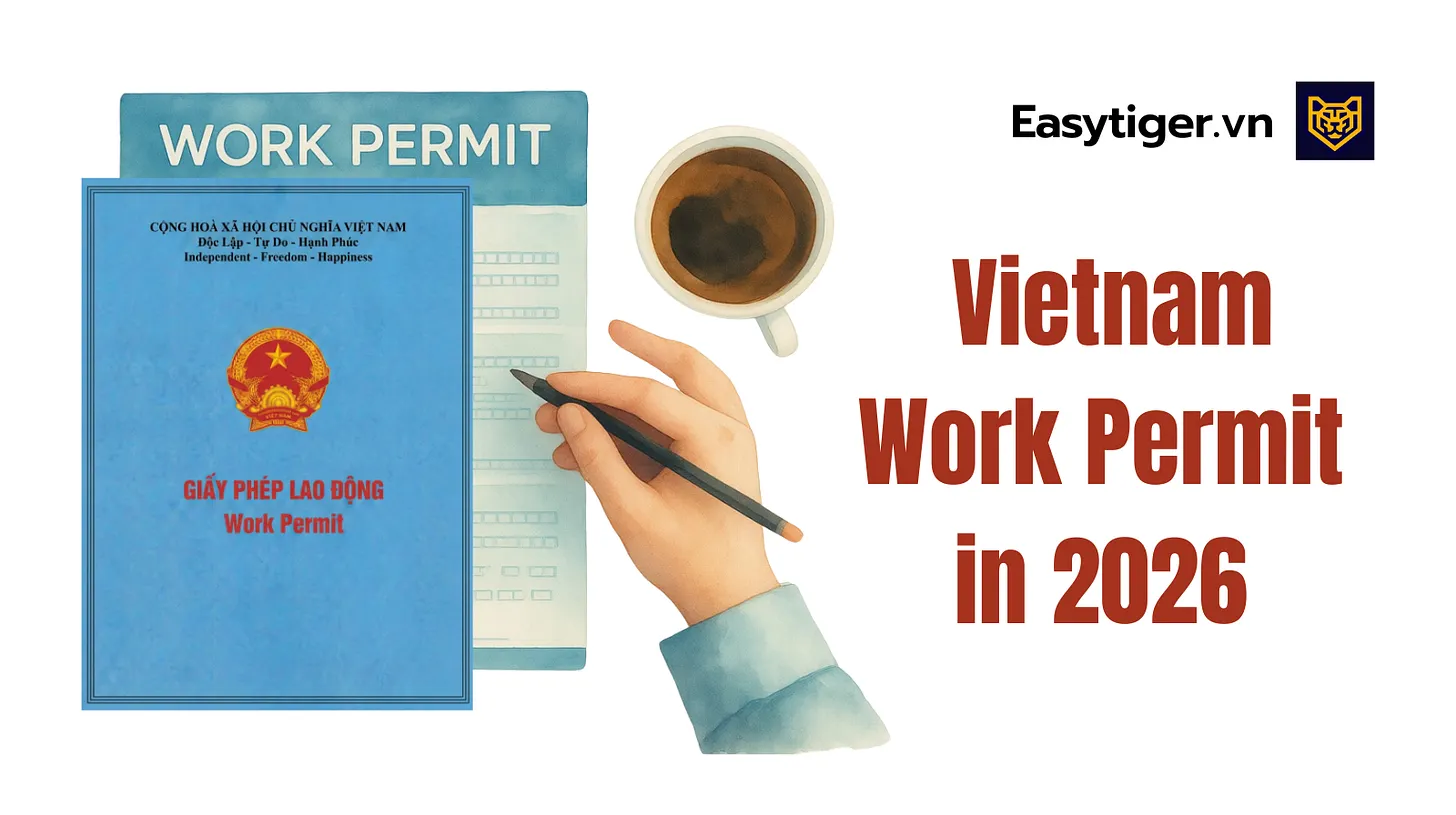
Work legally, hire confidently. Here is what the work permit system in Vietnam actually looks like, who it applies to, and what changed in the latest round of regulations. (This article was originally published on 29 May 2026 on our Substack)
Trong bài viết này11
Working in Vietnam as a foreigner, or hiring one as an employer, puts you inside one of Southeast Asia’s more layered compliance systems. The work permit, known locally as giấy phép lao động, sits at the center of it. Vietnam overhauled the entire framework governing foreign workers with Decree No. 219/2025/ND-CP, issued August 7, 2025, replacing both Decree 152/2020 and Decree 70/2023. The changes are substantial: the administrative authority has shifted, application steps have been consolidated, processing timelines revised, and the list of exemption categories expanded. If you are still operating under the old rulebook, this guide is your update.
What Is a Work Permit, and Who Manages It?
A work permit (giấy phép lao động) is the official legal document that authorizes a foreign national to work in Vietnam. Without it, the employment relationship has no legal standing under Vietnamese labor law, regardless of what any signed contract says.
To understand who manages work permits today, it helps to trace a recent chain of reforms. For years, the Ministry of Labor, Invalids and Social Affairs (MOLISA) held central authority over foreign labor management, with provincial-level Departments of Labor, Invalids and Social Affairs (DOLISA) handling most day-to-day processing. That arrangement changed significantly in early 2025 when MOLISA was formally dissolved and merged into the Ministry of Home Affairs (MOHA) under Decree No. 25/2025/ND-CP, effective March 1, 2025. All of MOLISA’s labor functions, including the issuance and oversight of work permits, were absorbed by MOHA. The restructuring was part of a broader government effort to streamline Vietnam’s administrative machinery and reduce ministerial overlap.
The reform did not stop there. Effective July 1, 2025, and cemented under Decree 219/2025/ND-CP from August 7, 2025, work permit authority was decentralized a step further. Rather than sitting with MOHA at the central level, the power to issue, renew, and revoke work permits now rests fully with the Provincial People’s Committees (Ủy ban nhân dân cấp tỉnh). Each Provincial People’s Committee decides which body handles applications on its behalf, so the receiving office can vary by province. In many provinces this is the Department of Home Affairs (DOHA), which stepped into the role previously held by DOLISA offices. For workers employed across multiple provinces, the People’s Committee where the employer’s head office is registered holds jurisdiction. This decentralization aims to speed up decisions and bring processing closer to where businesses actually operate.
What this means practically is that the processing environment is now more localized than ever. Provincial bodies have their own interpretations, internal norms, and processing rhythms. Ho Chi Minh City and Hanoi both have well-established systems with a relatively high volume of applications and experienced officers. Other provinces, particularly those further from major commercial centers, may apply the same legal framework with noticeably different levels of flexibility or scrutiny. For businesses expanding into new provinces, local knowledge of how the relevant provincial authority operates is no longer optional.
Who Actually Needs a Work Permit?
Most foreign nationals working in Vietnam need one. The rule applies broadly across:
- Foreign employees working under labor contracts at Vietnamese companies, foreign-invested enterprises, representative offices, and NGOs
- Intra-company transferees (in certain cases)
- Foreign workers executing service contracts or participating in projects and tenders in Vietnam
The positions covered are managers, executive directors, experts, and technical workers. That covers most roles that bring a foreign professional into a Vietnamese organization.
Vietnamese citizens’ employment is governed entirely by the Labor Code without this additional layer.
The Four Categories of Work Permit in Vietnam
Vietnam does not issue a one-size-fits-all work permit. Your permit type is defined by the role category you fall into, and each category carries its own qualification requirements.
Manager (Nhà quản lý): Individuals who direct and oversee an organization or a major business unit. This includes general directors, deputy general directors, division heads, and similar decision-making roles. Supporting documents typically include an appointment decision and proof of relevant management experience.
Executive Director (Giám đốc điều hành): The head of a branch, representative office, or business location, or a person who heads and directly runs at least one field of an agency, organization, or enterprise.
Expert (Chuyên gia): This is the most commonly used category for white-collar professionals. Under the new rules in Decree 219/2025, the experience threshold for experts has been lowered. Previously, three years of relevant experience were required. The new requirement is two years for most fields, and just one year for finance, science, technology, innovation, national digital transformation, and other priority sectors designated by ministries or provinces. A relevant university degree or higher is also required, along with a professional practicing certificate where applicable.
Technical Worker (Lao động kỹ thuật): For skilled trades and technical roles. Requirements include at least one year of vocational or technical training plus at least two years of relevant experience, or at least three years of relevant experience without that training.
If your role does not fit neatly into one of these four boxes, your application is going to have a problem. The labor authority assesses each application against these defined categories, and positions that look more like general or unskilled labor are routinely rejected.
What Happens If You Skip It
This section is worth reading carefully, especially for business owners who have been operating informally.
For the foreign worker: Working without a valid work permit, or with an expired one, carries a fine of VND 15 to 25 million (approximately USD 590 to 980) under Clause 3, Article 13 of Decree 283/2026/ND-CP, in force since September 10, 2026. Beyond the fine, the worker can also be deported as a supplementary penalty. An expired permit is treated identically to no permit at all. There is no grace period.
For the employer: Penalties are scaled to how many undocumented foreign workers are on the payroll. The figures below apply to an individual employer.
- 1 to 10 foreign workers without valid permits: VND 30 to 45 million
- 11 to 20 workers: VND 45 to 60 million
- 21 or more workers: VND 60 to 75 million
If the employer is a legal entity rather than an individual, those figures double under Clause 1, Article 7 of Decree 283/2026/ND-CP. A company employing even a handful of undocumented foreign workers could face penalties in the hundreds of millions of dong range, plus the associated reputational and operational disruption. Since 2025, inspections have intensified. This is no longer a theoretical risk.
When the Work Permit Is There But the Job Is Not
Having a work permit is necessary but not sufficient on its own. Under Decree 283/2026/ND-CP, an employer who assigns a foreign worker to a position, job title, or workplace location that does not match what is stated on the work permit can face fines of VND 5 to 10 million per affected employee, with the total penalty capped at VND 75 million. For companies, that amount doubles. Any change in role, title, or work location that departs from the permit’s stated content requires the employer to apply for a new work permit or update the existing documentation through the proper channel before the change takes effect, not after.
Who Does Not Need a Work Permit
Decree 219/2025 now recognizes 15 categories of exemption, expanded from 14 under the previous framework. The most practically relevant ones for the expat and business community are:
- LLC owners and joint-stock company board members with capital contributions of VND 3 billion or more. Below that threshold, a full work permit is still required.
- Short-term workers: Foreign managers, experts, and technical workers who work in Vietnam for a total of fewer than 90 cumulative days in a calendar year (January to December).
- Intra-company transferees moving from a foreign parent entity to its Vietnamese commercial presence, within the 11 WTO service sectors, provided they have been employed by the foreign entity for at least 12 consecutive months before the transfer.
- Foreign journalists with press practice certificates confirmed by the Ministry of Foreign Affairs.
- ODA project workers providing expert or technical consulting services under official international agreements.
- Students and interns of schools in Vietnam or abroad who hold an internship agreement or a job offer letter from an employer in Vietnam.
- Volunteers working unpaid under international treaties, with confirmation from a diplomatic mission or international organization in Vietnam.
- Workers in priority development sectors: A new category under Decree 219, this covers foreign workers confirmed by relevant ministries or provincial authorities to be working in areas such as finance, science and technology, innovation, national digital transformation, and other designated priority fields.
One important nuance: exempt does not mean paperwork-free, and the required step depends on the exemption. Some exempt groups need no confirmation at all, only a notice from the employer to the provincial authority at least three working days before the worker starts. These include owners, capital-contributing members, and board members with capital of VND 3 billion or more, people working in Vietnam for fewer than 90 days a year, and certain other cases under Article 154 of the Labor Code. The other exempt groups need a Confirmation of Work Permit Exemption (Giấy xác nhận không thuộc diện cấp giấy phép lao động), applied for 10 to 60 days before the start date and decided within five working days. Skipping the required step creates the same legal exposure as not having a work permit at all.
Foreign spouses of Vietnamese citizens residing in Vietnam are one of several groups that need only the employer’s advance notice, not the confirmation letter.
How Long Is a Work Permit Valid?
A work permit is valid for a maximum of two years, tied to the duration of the labor contract or the assignment documentation. It can be renewed once for up to another two years. After that second cycle, a fresh work permit application is required from the beginning, meaning a new dossier, new supporting documents, and a new issuance process, not simply an extension of the existing permit. Employers and foreign workers planning long-term arrangements in Vietnam should factor this two-plus-two structure into their workforce planning well in advance.
Work permit exemption certificates follow the same maximum of two years and can also be extended once.
A temporary residence card (TRC) can be issued based on work permit validity, for up to two years, allowing multiple re-entry without separate visa stamping.
The Application Process: Step by Step
In practice, a work permit application rarely travels alone. It typically runs in parallel with the work visa process and, once the permit is in hand, feeds directly into the TRC application. Coordinating all three from the start saves significant time. The government fees are modest: the work permit fee is set by each province, and a TRC valid for up to two years costs USD 145. That is the cost if you know how to handle the process yourself.
In reality, once you factor in document legalization or apostille, certified translation, health examinations, and professional agency support, the numbers shift. A reputable local agency typically charges USD 300 to 800 for the work permit end-to-end, not including the work visa and TRC processes, which can add another USD 500 to 700.
Step 1: Post the job vacancy
For directly hired local roles, the employer must announce the job vacancy on any public platform or the company’s own channels at least five days before submitting the work permit application. This labor market testing step confirms that no qualified Vietnamese candidate was available. Under Decree 219, any public platform or the company’s own website qualifies. Intra-company transferees are generally exempt from this step.
Step 2: Assemble the dossier
One of the most meaningful improvements under Decree 219 is the elimination of the foreign labor demand justification as a separate prior-approval step. Previously, employers had to obtain approval for hiring foreign workers first, then submit the work permit application as a second, standalone process. Under the new framework, both are combined into a single submission using Form No. 03 of the Decree’s Appendix.
The dossier covers: Form No. 03 (the employer’s explanation of need and work permit application combined into one document); a health certificate from a recognized medical facility issued within the past 12 months; a valid passport; a judicial record certificate issued within six months of the submission date; and supporting documents proving the foreign worker’s role category, such as university diplomas, professional certificates, appointment decisions, or experience confirmation letters. Documents demonstrating the form of work arrangement, whether a labor contract, assignment letter, or service contract, are also required.
All documents issued outside Vietnam must be consularly legalized or apostilled and translated into Vietnamese by a certified translator before submission. Since September 11, 2026, documents from most countries can carry an Apostille instead of consular legalization (Decree 293/2026/ND-CP). This is consistently where applications slow down, so building it into the timeline from the start is essential.
Step 3: Submit the application
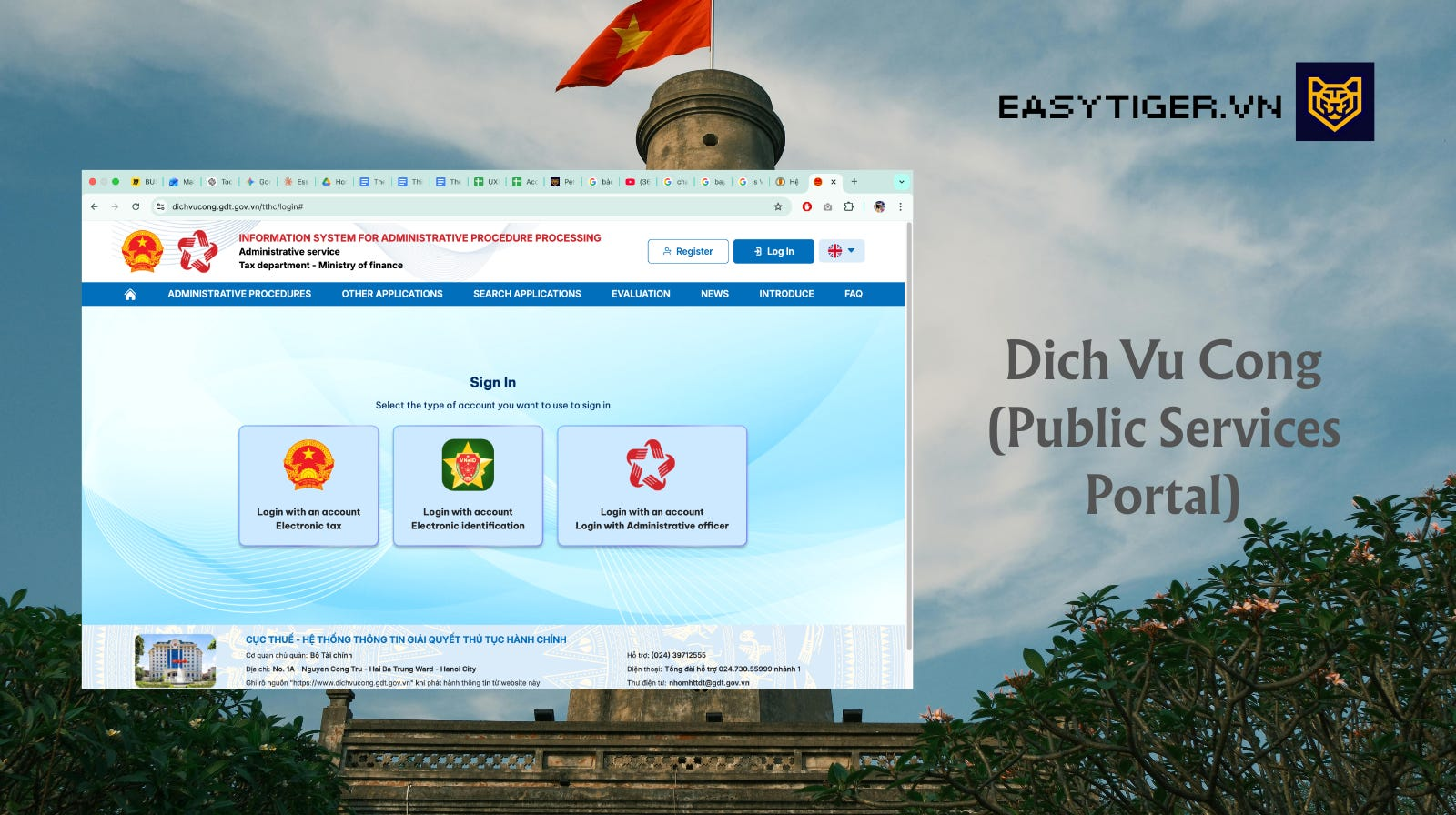
The application is submitted to the body designated by the Provincial People’s Committee in the province where the foreign worker will be based, within a window of 10 to 60 days before the intended start date. For workers across multiple provinces, submission goes to the authority where the employer’s head office is registered. Applications can be filed online through the National Public Service Portal at dichvucong.gov.vn, in person, by post, or through an authorized service at the Public Administrative Service Center.
Step 4: Processing and decision
Once a complete dossier is received, the authority has 10 working days to issue the work permit, or three working days to issue a written rejection with stated reasons. For international hires requiring overseas document legalization or apostille and translation, most practitioners estimate a realistic end-to-end timeline of six to ten weeks from kickoff to permit in hand.
What the Latest Rules Mean for You in 2026
Decree 219/2025 represents a genuine step forward in streamlining the process, but there are several things you should stay on top of.
Watch the expiry date and the labor contract simultaneously. Your work permit cannot be valid longer than your labor contract, and your labor contract cannot extend beyond the work permit. These two documents need to be aligned. If your permit is about to expire, you must apply for renewal before it lapses, not after. There is no retroactive renewal option.
Renew in advance. The renewal must be filed at least 10 days and no more than 45 days before your current work permit expires. Filing earlier than 45 days is not safer: an application submitted before the window opens can be sent back. The safe approach is to start gathering documents around 60 days before expiry, then file as close to the start of the window (45 days before expiry) as you can. That leaves time to fix anything the authority asks for, given that processing takes up to 10 working days after a complete dossier is received. Leaving it to the last 10 days creates unnecessary risk, and an expired permit means you are out of compliance, full stop.
Work permits are employer-specific. If you change jobs, you do not transfer your permit. Your new employer must apply for a fresh work permit for you in their name. Starting work at a new employer before the new permit is issued is a violation.
The 90-day short-term rule is now clean. Under Decree 219, the threshold for short-term work exempt from a work permit is 90 cumulative days per calendar year. The new calculation runs from January 1 to December 31 on a cumulative basis. If your role involves frequent short-term visits that might add up over a year, track the count carefully.
If your work permit was issued under the old decrees, it remains valid until its current expiry date. But when the time comes to renew, you will be doing so under Decree 219/2025. Get familiar with the new requirements before that moment arrives.
Vietnam Is Still Loosening the Door for Foreign Workers
If you are planning a longer-term move or a significant hiring decision, here is something worth knowing: the rules are still being actively rewritten. Decree 219/2025 took effect on August 7, 2025, and the Ministry of Home Affairs has already put a draft amendment out for public consultation. As of August 2026, the ministry said the amendment was still being drafted.
The proposed changes go further than the current framework in almost every direction. The experience threshold for experts in technology, AI, finance, innovation, and digital transformation would be removed entirely, addressing a long-standing criticism that rigid experience clocks screen out exactly the kind of young, high-capability talent Vietnam is competing to attract. Foreign-issued health certificates, which today are accepted only where a mutual-recognition agreement applies and the certificate is no more than 12 months old, would be accepted more widely, so an overseas hire could complete their full dossier before ever setting foot in Vietnam. Passport legalization would no longer be required, and documents already sitting in shared government databases would not need to be resubmitted, cutting paperwork that has always been more procedural than substantive.
The education sector would see expanded exemptions, covering foreign nationals with master’s degrees or above in STEM, digital transformation, finance, and business administration who teach or conduct research at Vietnamese institutions.
None of this is law yet, and the final decree may look different from the draft. But the direction has been consistent for years: Vietnam is deliberately lowering the compliance cost of bringing in international talent, and each revision moves the dial a little further. For anyone building a business here or planning a career in Vietnam, that trajectory is worth tracking as closely as the rules themselves.
If you want to make sure your situation is sorted correctly, whether you are an individual expat figuring out your eligibility category or a business onboarding foreign staff for the first time, connect with a verified specialist through Easytiger.vn.
This article is for informational purposes only and does not constitute legal, HR, or immigration advice. Regulations in Vietnam are subject to change. All information is based on sources available as of the date of publication. For guidance specific to your situation, consult a qualified specialist.
Câu hỏi thường gặp


Easytiger Match
Tìm chuyên gia phù hợp
- Cho chúng tôi biết nhu cầu của bạn
- Chúng tôi chọn lọc (các) chuyên gia và giới thiệu cho bạn