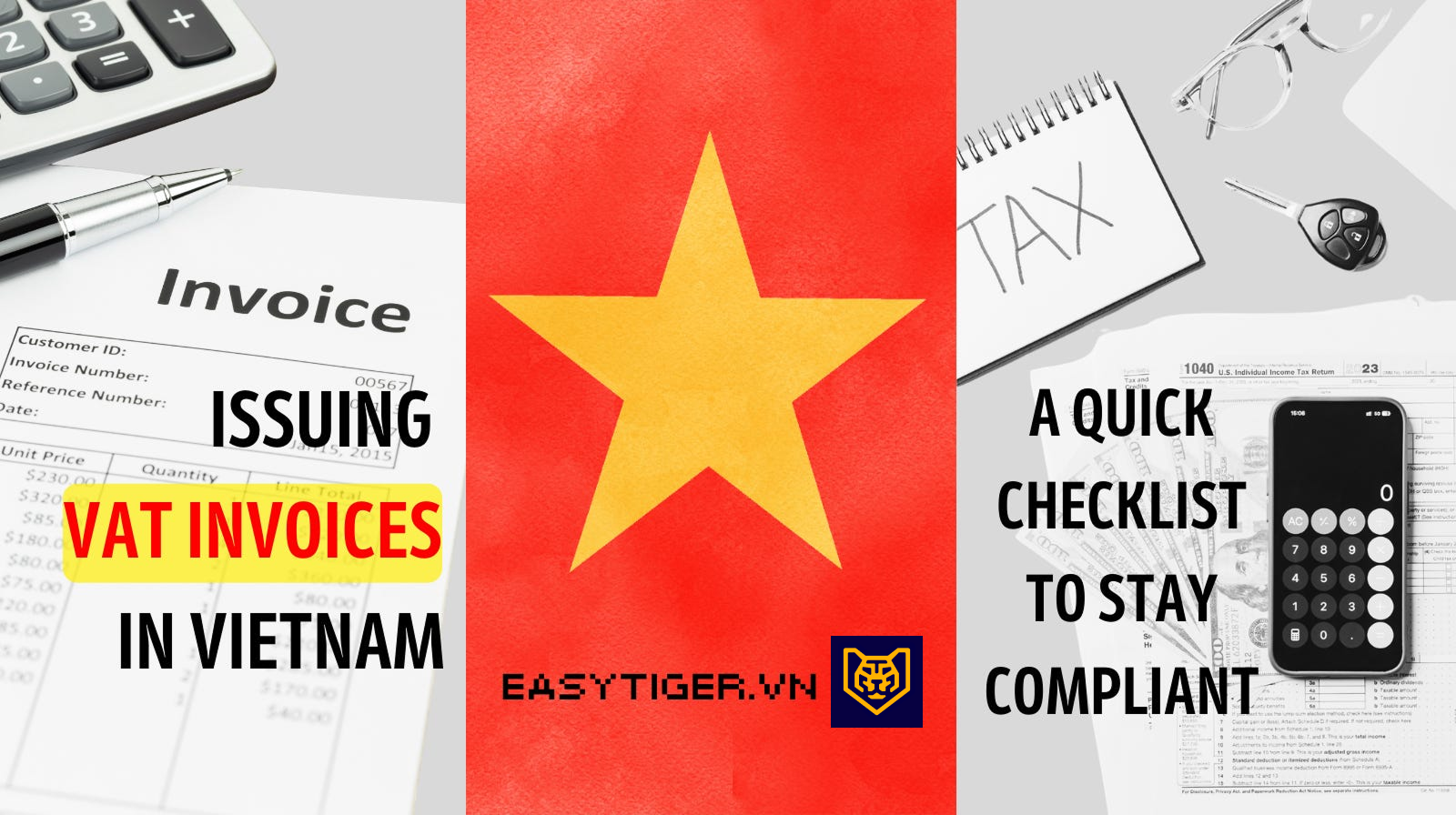
A practical guide for navigating Vietnam's e-invoice system with confidence. (This article was originally published on 18 March 2026 on our substack)
In this article6
VAT invoicing in Vietnam is one of those things that looks straightforward until you are actually doing it. The rules are more layered than they first appear, and the margin for error is smaller than most small business owners expect. Whether you are issuing your first invoice or tightening up a process that has quietly developed some gaps, getting this right matters — for your compliance, your client relationships, and your peace of mind. Here is a practical checklist of what to keep in mind.
1. Know Your Numbers and Tax Rates Before You Issue
Before opening your invoicing software, be clear on what taxes apply and at what rate. Vietnam’s standard VAT rate is 10%, with a temporary reduction to 8% in effect for many goods and services from July 1, 2025 through December 31, 2026 under Resolution No. 204/2025/QH15. The 8% rate has exclusions, including telecommunications, finance, banking, insurance, and real estate.
If you provide services to overseas clients, the applicable VAT rate is 0%, provided the service qualifies as an export of services consumed outside Vietnam. Software products and software services are not subject to VAT at all under VAT Law 48/2024/QH15, so check whether your category falls there before choosing a rate. The key habit: confirm whether you are invoicing a domestic individual, a domestic business, or an overseas entity, and lock down the correct rate before building the invoice.
2. Choose the Right E-Invoice Software
Electronic invoices have been mandatory in Vietnam since July 1, 2022, and since July 1, 2026 the rules are set out in Decree 254/2026/ND-CP, which requires sellers to issue e-invoices except in specifically exempted cases. The market has solid options — Viettel S-Invoice, VNPT Invoice, MISA meInvoice, BKAV eHoadon, and others are widely used by small and medium businesses. What matters more than the brand name is finding the right fit for your team.
Look for a provider with an intuitive interface that your team can use confidently under deadline pressure, reliable and responsive customer support, full regulatory compliance, and pricing that makes sense for your scale. A good platform should also support sending invoice notifications directly to your client’s email, which saves time on every billing cycle.
3. Accuracy First: Get Client Details Right Before Issuing
An invoice with incorrect customer information is not just an admin problem — it can be legally invalid. Before issuing, always confirm your client’s full legal entity name exactly as registered, their current registered address (many changed following Vietnam’s 2025 administrative reorganization), their active tax code, and any additional details required for individual buyers under Decree 254/2026/ND-CP.
Collect this information upfront as part of your contract or onboarding process — it usually sits alongside banking and payment terms anyway. Once the invoice is drafted, send it to your client for review before finalizing. Most modern e-invoice platforms support this draft-and-confirm workflow. Under current regulations, invoices must be in Vietnamese, with other languages permitted only as supplementary text.
4. Fixing a Wrong Invoice: Research First, Then Get the Right Help
Errors happen. If information on an issued invoice is wrong, do not rush to fix it without understanding the correct process first — there are specific steps under Vietnamese tax regulations, and skipping one can create further issues down the line.
Start by doing your own research or consulting your accountant to get a clear picture of what is required. Then reach out to your e-invoice software supplier’s customer support team. They understand the correction workflow inside their platform better than most people expect, and they can walk you through exactly what to do step by step.
Corrections come with accompanying reports and filings that must be submitted to the tax authority on time to keep your records up to date. Make sure everything is sent within the required deadlines — missing these carries penalties. Treat any invoice correction as a multi-step process, not just a document swap.
5. Issue Your Invoice on the Right Date
Invoice timing directly affects your tax reporting obligations. Under Decree 254/2026/ND-CP, which replaced Decree 123/2020/ND-CP and Decree 70/2025/ND-CP from July 1, 2026, the standard rule for service businesses is: issue the VAT invoice upon completion of service delivery, regardless of payment. Money collected before or during delivery requires an invoice at the time of receipt, except for a deposit under the Civil Code that secures performance of the service contract. For phased projects, invoice at each delivery milestone.
Align your invoice dates with your contract payment terms — the invoice date, service delivery, and payment window should always be consistent and traceable. When everything lines up cleanly across your contract, your records, and your invoice, it becomes a lot easier to manage reporting and respond confidently if questions ever come up.
6. Stay Organized and Cross-Check Before Submission
Keep all issued invoices organized by period and linked to the corresponding contracts, delivery records, and payment receipts. Before submitting your VAT reports, have your accountant cross-check the figures against your issued invoices — a quick review at this stage catches discrepancies before they become a bigger issue. Reporting deadlines come around faster than expected, so having a clean, organized paper trail at all times makes the whole process significantly less stressful.
VAT invoicing is just one piece of the bigger picture of running a business in Vietnam. If you found this useful, share it with a fellow founder who could use a cleaner checklist. And if you have questions or want to connect with a verified accounting specialist, Easytiger is here to help you find the right person.
This article is for informational purposes only and does not constitute legal or tax advice. Consult a qualified accountant or tax advisor for guidance specific to your business situation.
Frequently asked questions


Easytiger Match
Find the right professional
- Tell us what you need
- We shortlist professional(s) and introduce them to you