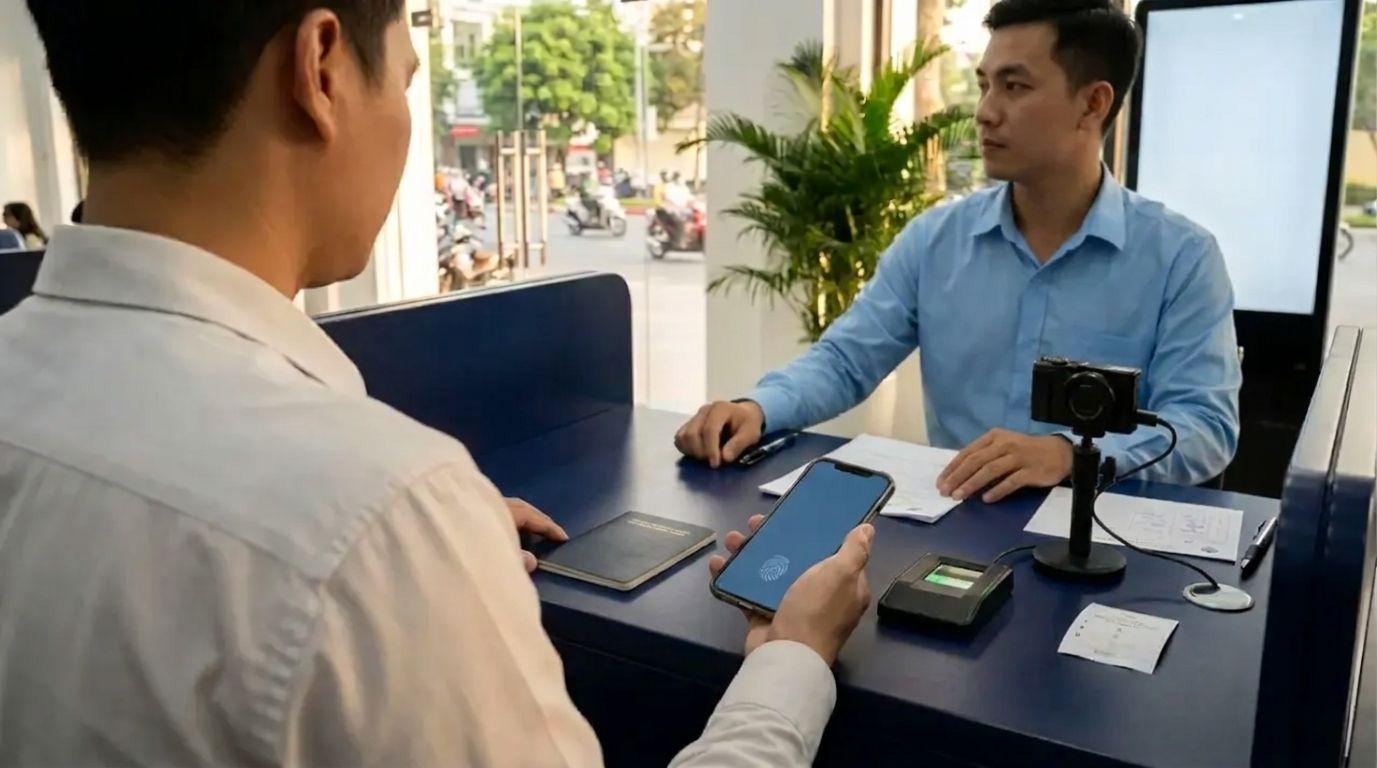
Picture a foreign founder who runs a consulting business in Ho Chi Minh City. She believes in Vietnam's growth but does not want to establish or operate another company. She simply wants to invest part of her savings in Vietnamese businesses.
The plan sounds easy: open an account, buy an asset and collect the return. Yet the bank account, foreign ownership room, investor eligibility, tax records and payment trail can decide whether the investment closes properly and whether the money can later leave Vietnam. Foreign portfolio investment, or FPI, offers this exposure, but it is a regulated route.
What is foreign indirect investment in Vietnam?
Foreign indirect investment and foreign portfolio investment are commonly used to describe investment in Vietnamese securities, valuable papers, funds or certain company interests without directly participating in management of the investment activity.
For non-resident foreign investors, Circular 03/2025/TT-NHNN, effective from 16 June 2025, covers securities and valuable papers, qualifying unlisted-company investments, VND investment entrustment and other permitted securities. It replaced Circular 05/2014.
A passive intention does not automatically make a transaction legally indirect. The route depends on residence status, the asset, the target's history, foreign ownership and whether a foreign investment capital account is required.
FPI versus FDI in Vietnam
Foreign direct investment, or FDI, usually involves establishing, controlling or operating a business or project. FPI normally focuses on income and capital growth. The legal and banking distinction is more technical.
| Question | Foreign direct investment | Foreign portfolio investment |
|---|
| Typical objective | Build, control or operate a business or project | Earn dividends, interest or capital gains without running the business |
| Main cash channel | A foreign investment capital account where required under Circular 38/2026/TT-NHNN | A VND indirect investment account for a non-resident investor under Circular 03/2025 |
| Investor involvement | Often includes project execution, governance or control | Usually limited to shareholder, bondholder or fund-investor rights |
| Exit | Often negotiated and document-heavy | Listed assets may be more liquid, while private interests and bonds may still be difficult to sell |
Since 18 August 2026, Circular 38 has used “foreign investment capital account” instead of the former “direct investment capital account.” A company established by a foreign investor normally falls within that framework. So does an acquired Vietnamese company when foreign investors hold more than 50 percent of its charter capital. Listed or registered public-company shares follow the securities framework.
Control is a useful commercial clue, not a complete legal test. Classify the transaction before transferring money.
Who can make an indirect investment in Vietnam?
Foreign individuals and organisations established under foreign law can participate, subject to the rules for the chosen asset.
For banking purposes, residence matters. Circular 03 applies its account regime to non-resident foreign individuals and foreign organisations. A resident foreign individual uses a VND payment account under the applicable rules. Foreign-exchange residence should not be assumed from a visa, residence card or tax status.
FPI can suit an expat investing savings, an overseas company, a family office, a fund or a financial institution. Eligibility remains product-specific, and a foreign passport does not guarantee access to every share or bond.
Important: FPI does not create an investor visa or residency right
The FPI routes in this guide do not, by themselves, qualify a foreigner for a ĐT investor visa, temporary residence card or permanent residence. Buying listed shares, fund certificates or bonds, or using an indirect investment account, proves an investment transaction, not immigration eligibility.
Vietnam's 2026 consolidated Immigration Law treats investor visas as a separate regime based on documented capital contributions. Only ĐT1, ĐT2 and ĐT3 are eligible investor categories for a temporary residence card. ĐT4, which applies to capital contributions below VND 3 billion, is not. A registered acquisition in an unlisted Vietnamese company may require a separate, case-specific immigration assessment, but ordinary portfolio holdings do not create visa status automatically.
What principles must a foreign indirect investor follow?
- Follow all relevant laws. Investment, securities, foreign-exchange, tax, anti-money-laundering and sector-specific rules can apply at the same time.
- Use the correct VND account. A non-resident investor generally conducts FPI receipts and payments through a VND indirect investment account at a licensed bank.
- Keep one primary account. The general rule is one indirect investment account at one licensed bank. Circular 03 permits limited additional accounts for specified foreign securities companies, funds and institutional portfolios linked to separate securities trading codes.
- Do not use a joint account. Its balance also cannot be converted into a term or savings deposit.
- Describe every transfer clearly. Payment instructions must state their purpose so the bank can verify and retain the supporting evidence.
- Provide complete documents. The investor is responsible for the authenticity, validity and legality of information supplied to the bank.
- Check access before committing. Foreign ownership room, market-access conditions, professional-investor requirements and any investment registration must be cleared before payment.
The practical rule is simple: plan the exit at the same time as the entry.
Main forms of foreign portfolio investment in Vietnam
1. Listed and registered shares
Buying shares on a Vietnamese exchange or registered trading market is the most familiar form of FPI. Returns may come from dividends and a later sale, with market and currency risk.
A foreign designer in Da Nang might buy shares in several consumer and logistics companies instead of one private business. This suits investors seeking transparent prices, diversification and potentially easier exits.
The usual setup involves a licensed bank, a broker or custodian, and a securities trading code registered through a depository member. Newer institutional and representative routes may differ, so the provider should confirm the structure.
Do not assume every public company has a 49 percent foreign cap. Under Decree 245/2025/ND-CP, the effective limit depends on the issuer's business lines, laws, treaties and recorded foreign ownership room.
2. Fund certificates and exchange-traded funds
Fund certificates provide exposure to a managed pool of assets. An exchange-traded fund, or ETF, is bought and sold on the market, while an open-ended fund is normally subscribed for and redeemed through the fund or an authorised distributor.
This can suit a first-time investor seeking diversification. A regional manager might choose a Vietnam equity fund rather than selecting ten individual shares.
The investor completes the bank and securities or fund-distribution setup, then follows the subscription, trading or redemption process. Read the prospectus, fees, valuation method, liquidity terms and currency exposure. A managed fund can still lose money.
3. Bonds and other valuable papers
Foreign investors may access eligible government bonds, publicly offered or listed corporate bonds, and other permitted valuable papers. As a creditor, the investor expects interest plus repayment.
This may suit income-focused investors, but “fixed income” does not mean “risk-free.” Default, interest-rate movements, weak liquidity and VND depreciation can reduce returns.
Private corporate bonds require extra care. Under the consolidated Securities Law and Decree 200/2026/ND-CP, eligibility depends on professional-investor status and the bond category. Rules effective in 2026 also restrict the private bonds available to individual professional investors, with conditions involving credit ratings, qualifying collateral or payment guarantees in relevant cases. Confirm eligibility for the specific issue through a licensed intermediary before paying.
4. Qualifying interests in unlisted Vietnamese companies
A foreign investor may contribute capital or acquire shares or capital interests in an unlisted enterprise through the indirect route when the target is not required to use a foreign investment capital account.
Imagine a Singapore investor buying 20 percent of a Vietnamese food distributor without taking over management. This suits an experienced investor who accepts detailed due diligence and a less liquid holding period.
Review the company's licences, debts, taxes, land, ownership records, shareholder agreement and exit rights. Under the 2025 Investment Law, prior registration applies in specified conditional sectors, when relevant foreign ownership crosses or increases above 50 percent, and for targets with land-use rights in sensitive locations. Decree 96/2026/ND-CP provides the procedure.
A 20 percent stake is not automatically FPI. If the target was established by a foreign investor, or another capital-account trigger applies, the payment route may be different. Confirm it with the bank and adviser before signing an unconditional closing arrangement.
5. VND investment entrustment
An investor may entrust VND capital to a fund management company or another organisation legally licensed to receive investment entrustment. The provider manages the mandate within the agreed scope.
This may suit a family office or business owner wanting local execution without making every trade. The investor uses the permitted account route and signs a mandate with the licensed provider.
Investment entrustment is not a fund certificate. Verify the manager's licence, permitted assets, custody, fees, valuation, conflicts controls and withdrawal terms.
How to set up an FPI investment correctly
Before the first transfer, work through five questions:
- Who is investing? Confirm the legal investor, beneficial owner and foreign-exchange residence status.
- What is being purchased? Identify whether it is a listed security, fund unit, bond, private-company interest or entrusted mandate.
- Can this investor buy it? Check foreign ownership room, market access, professional status and any required registration or approval.
- Which accounts are required? Arrange the correct bank account, then the brokerage, custody, trading-code or fund account where relevant.
- Can every payment be proved? Keep transfer instructions, bank statements, contracts, confirmations, distribution notices and tax records under the same investor name.
Opening an account does not approve the investment, and an investment approval does not replace the correct bank channel.
How can a foreign FPI investor transfer profits abroad?
Vietnam permits a non-resident investor to reinvest lawful FPI income or buy foreign currency and remit it abroad. Article 6 of Circular 03 expressly permits the indirect investment account to fund the transfer of capital, profits and other lawful income overseas.
The practical sequence is:
- Receive the money correctly. Sale proceeds, dividends, bond interest, private-company distributions or entrusted-investment returns should enter the correct indirect investment account.
- Complete the tax position. The applicable treatment depends on whether the investor is an individual or organisation and whether the income comes from dividends, interest, securities transfers or a private capital transfer. Do not assume one tax rate covers every return.
- Prepare the evidence. Banks commonly request identity or incorporation records, account statements, trade confirmations or transfer agreements, income documents, tax evidence where relevant, and overseas beneficiary details.
- Buy foreign currency and remit. The investor instructs the licensed bank to convert the VND balance and transfer it to the overseas account. The bank checks the purpose and documents under its procedures and anti-money-laundering obligations.
Money funded from the wrong account, paid to an unrelated party or described vaguely may be difficult to reconcile. Bank requirements vary, so obtain the remittance checklist before selling the asset or declaring a distribution.
The practical takeaway
FPI can provide exposure to Vietnam without building another operating company. The right option may be a listed share, fund, bond, managed mandate or qualifying private-company interest.
For a small business owner or individual, the safest process is deliberately boring: classify the transaction, verify access, use the correct account and preserve every document from entry to exit. The asset may create the return, but the compliance trail is what makes that return usable.
Need help with an FPI investment in Vietnam?
No single article can cover every FPI situation. The correct route depends on who is investing, what is being acquired and how the transaction is structured. If you need help confirming eligibility, identifying required approvals, choosing the correct account, or planning the investment and profit repatriation process, contact EasyTiger. We can connect you with a suitable legal professional who can review your circumstances and help you move forward with a compliant, practical plan.
This article provides general information, not legal, tax or investment advice. Information was checked in September 2026. Law 24/2026/QH16 has been enacted but will amend the Investment Law only from 1 March 2027, so transactions closing on or after that date should be reviewed again.