
Filing tax, checking an e-invoice, looking up a tax ID, or managing tax as an overseas supplier? Vietnam has several official online tax systems. Here is a practical guide to which portal does what, and which ones individuals, foreign founders, and small businesses actually need.
In this article9
The first time you deal with tax in Vietnam, the confusing part is not always the tax itself. Sometimes it is simply figuring out where to go.
Search for “Vietnam tax online” and you will quickly run into eTax, an electronic invoice website, a tax public service portal, a taxpayer lookup tool, and another eTax portal specifically for foreign suppliers. They all look official because they are, but they do very different jobs.
For an accountant who works with these systems every day, that may feel obvious. For an expat trying to check a tax identification number, or a foreign founder running a small company in Vietnam, it is much less intuitive.
Vietnam's Tax Department operates several digital systems for different parts of the tax process and there’re six key portals. There is also an important update to understand in 2026: some functions are gradually being consolidated into the Tax Administrative Procedures Portal.
So instead of simply giving you six links, let us look at when you would actually use each one.
The quick version: which Vietnam tax portal do you need?
| Portal | What you use it for | Most relevant to |
|---|---|---|
| eTax | Tax declarations, payments and tax obligation lookup | Businesses, organizations, individuals |
| Electronic Invoice Portal | E-invoice registration, management and lookup | Businesses, sellers, accountants |
| Tax Administrative Procedures Portal | Online tax procedures, submissions and application tracking | Businesses and individuals |
| Business Tax Support Portal | Tax guidance, policies and practical support | Household businesses, individual business owners |
| Taxpayer Information Lookup | Checking tax IDs and taxpayer information | Individuals and businesses |
| Foreign Supplier Tax Portal | Registration, declaration and payment by qualifying foreign suppliers | Overseas companies supplying into Vietnam |
You probably will not use all six. The point is knowing where to start when a particular tax question comes up.
1. eTax: the old familiar online tax system
Official portal: thuedientu.gdt.gov.vn
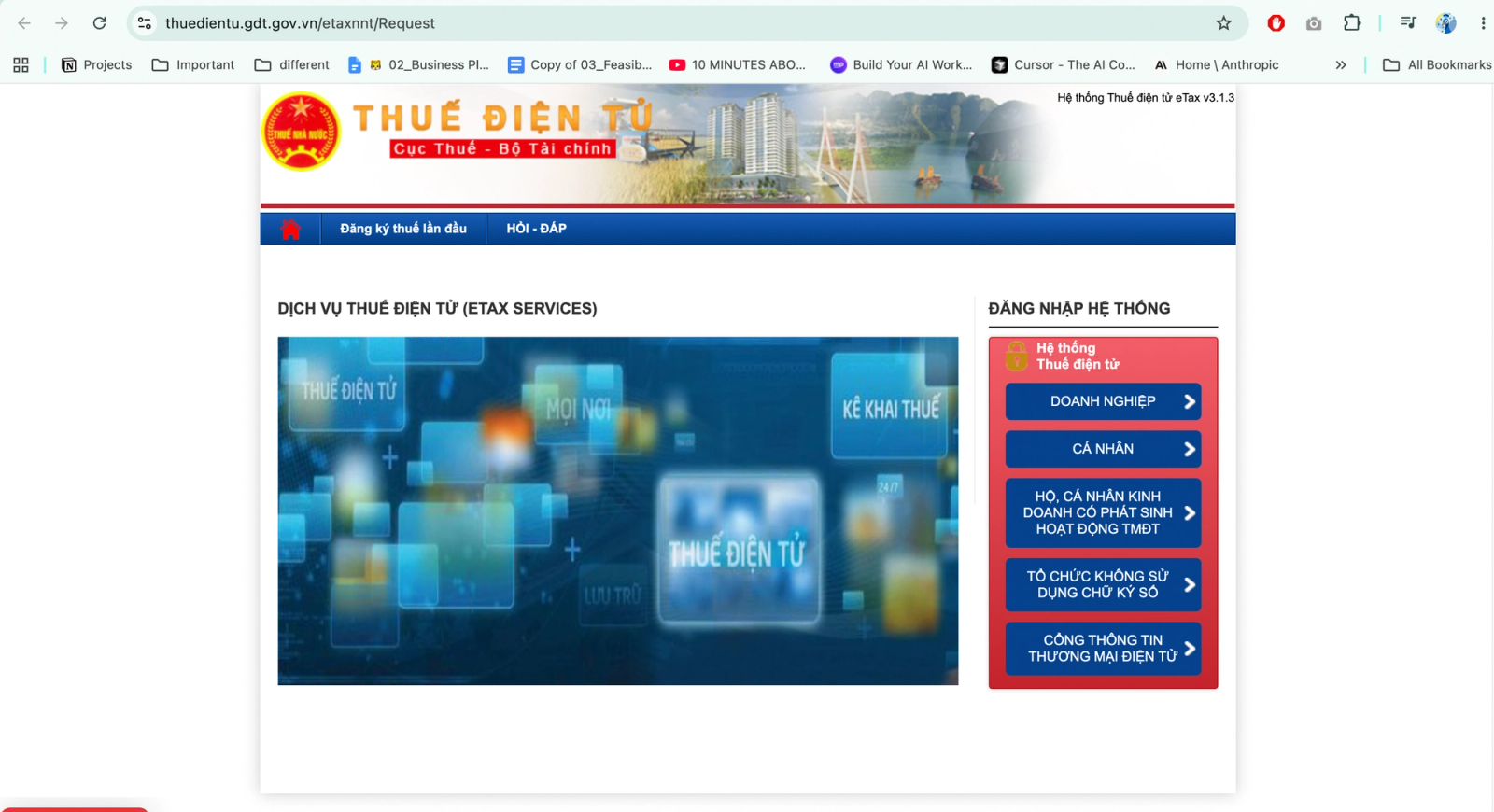
For years, this platform has been one of the main online tax systems businesses encounter in Vietnam. It supports electronic tax services such as filing declarations, making tax payments and reviewing declarations or tax obligations.
If you operate a Vietnamese company, your accountant is likely much more familiar with this portal than you are.
For small business owners, that is actually an important point. You do not necessarily need to personally prepare every tax return, but you should know where your company's tax information is being submitted and what account is being used.
Individuals may also encounter Vietnam's eTax ecosystem when managing personal income tax. The eTax Mobile application is particularly useful for individual taxpayers, although it is an app rather than one of the six web portals covered here.
There is one 2026 caveat, which we will come back to shortly: Vietnam is gradually moving more taxpayer interactions toward its newer Tax Administrative Procedures Portal.
2. Electronic Invoice Portal: when the issue is an invoice
Official portal: hoadondientu.gdt.gov.vn
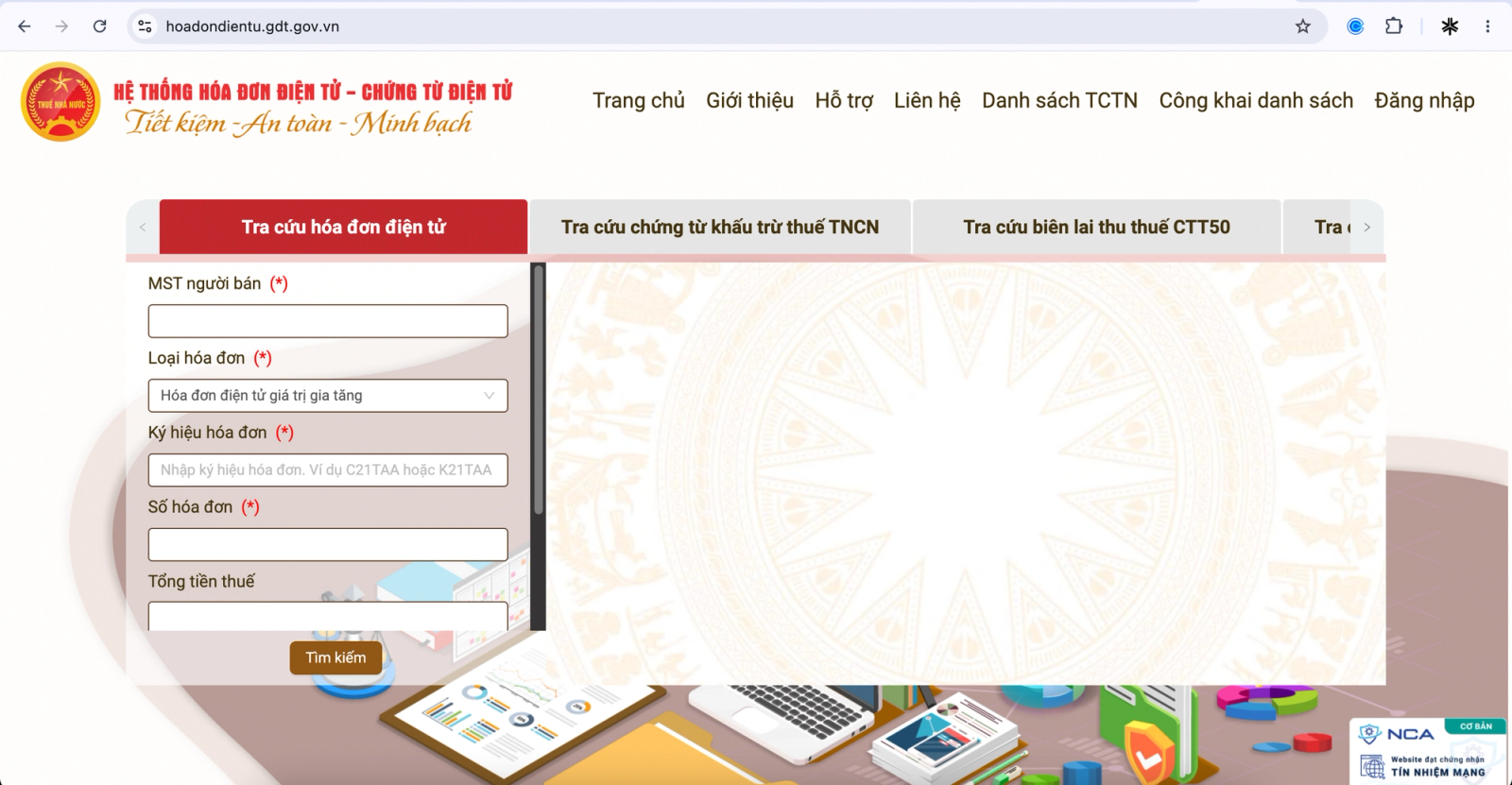
An e-invoice and a tax return are related, but they are not the same thing. This is where many first-time business owners get confused.
Vietnam's Electronic Invoice and Electronic Document System is dedicated to electronic invoices. It supports functions relating to e-invoice registration and administration and allows users to look up invoice information.
Imagine you have just started a small consulting company in Ho Chi Minh City. Your accountant tells you that the company is registered for tax, but now you need to issue compliant electronic invoices to clients. That is an invoice question, so the electronic invoice system becomes relevant.
It can also be useful when you need to verify invoice information received from a supplier rather than simply accepting a PDF or screenshot sent by email.
For companies operating in Vietnam, understanding the difference between tax filing and e-invoicing is basic but important. Your accounting software or e-invoice provider may handle much of the process in the background, but the underlying tax authority system still matters.
3. Tax Administrative Procedures Portal: increasingly important in 2026
Official portal: dichvucong.gdt.gov.vn
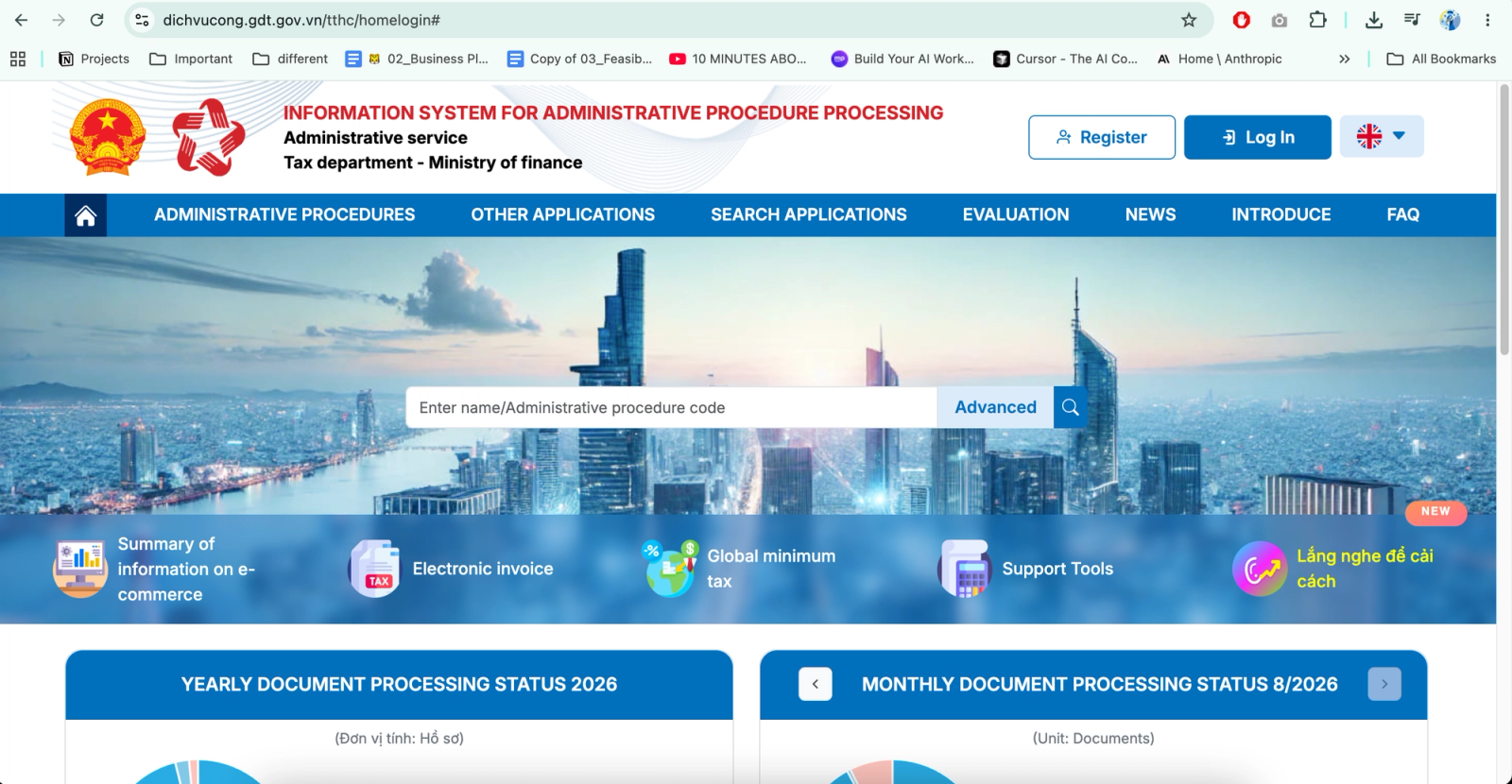
This is probably the portal worth paying the most attention to going forward.
The system allows taxpayers to conduct tax administrative procedures online and track the processing of their submissions. Tax Department guidance has described it as the system intended to become the single interface between taxpayers and the tax authority, replacing older electronic tax interfaces over time.
This explains an otherwise confusing situation in 2026: you may see both eTax and the newer administrative procedures system being referenced in tax guidance. That does not necessarily mean one of the links is wrong. The systems are going through a transition.
As of our research in August 2026, eTax remains accessible, while the Tax Department is directing an increasing number of procedures through the newer portal. If you find an older guide telling you to use eTax but the Tax Department's current instructions direct you elsewhere, follow the instructions for the specific procedure you are completing.
4. Business Tax Support Portal: useful when you need guidance first
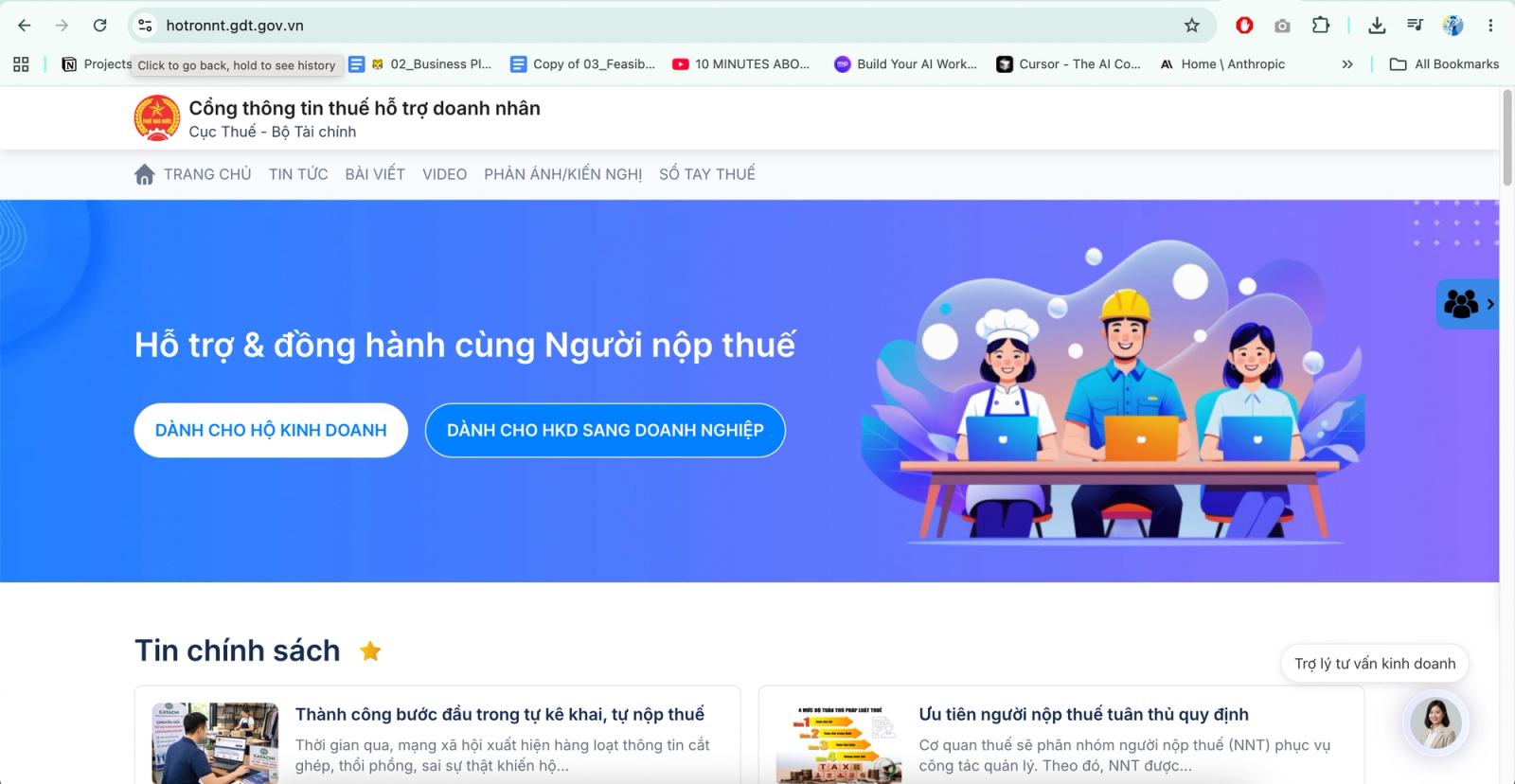
Official portal: hotronnt.gdt.gov.vn
Not every tax problem begins with a tax return. Sometimes you simply need to understand what you are supposed to do.
The Tax Department's business support portal provides tax information, guidance, policy materials, practical resources and support for business taxpayers, with particular relevance to household businesses and individual business owners.
That makes it different from the filing portals.
If you are running a small operation and trying to understand a new tax requirement before doing anything, this can be a sensible starting point. Once you know what procedure applies, you can move to the relevant transactional system.
For a foreigner operating through a Vietnamese company, however, this should generally be viewed as an information resource rather than the main place where your company manages its regular tax compliance.
5. Taxpayer Information Lookup: the simple tool people forget about
Official portal: tracuunnt.gdt.gov.vn
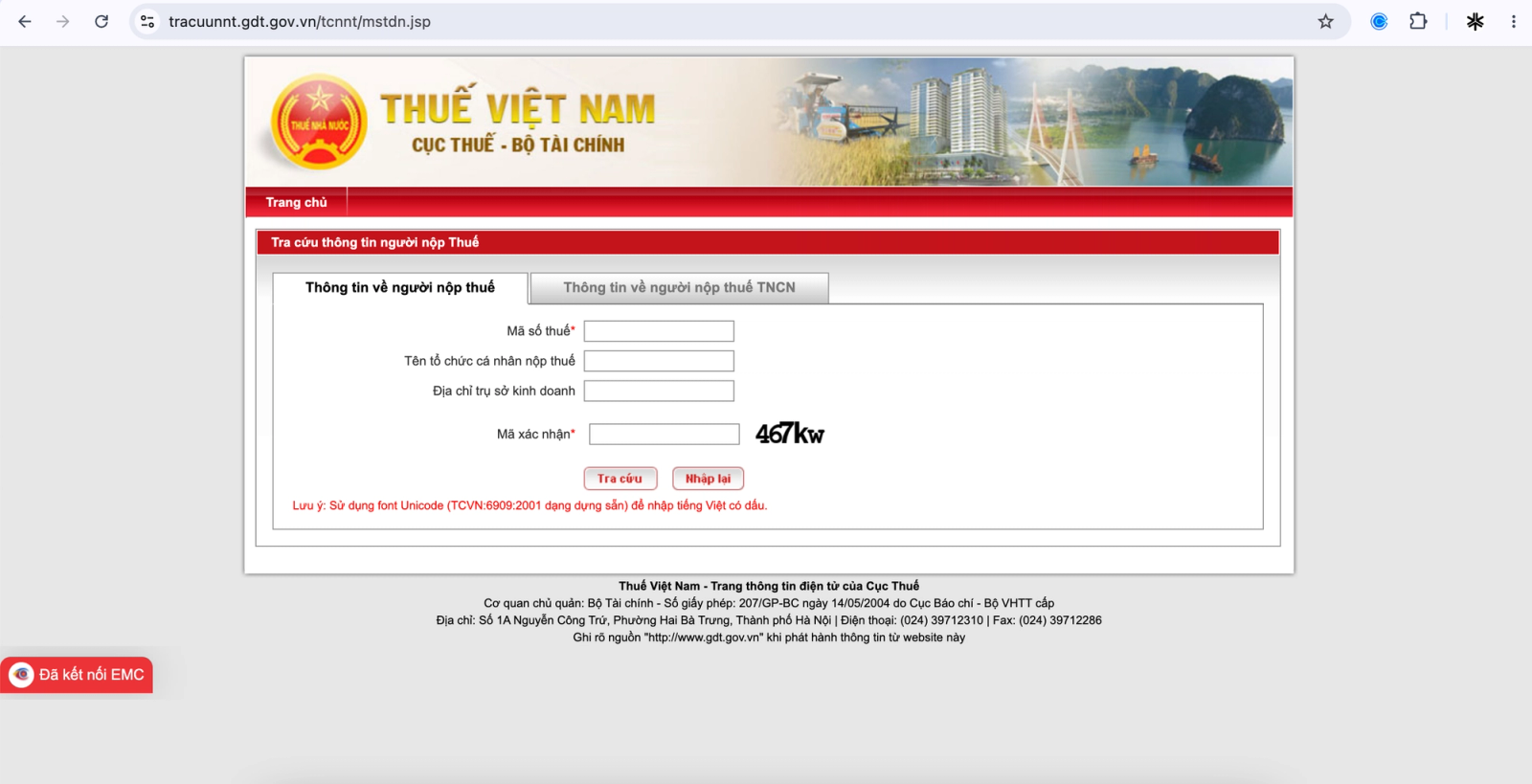
This portal has a much narrower job, but it can be surprisingly useful.
It allows you to look up taxpayer information, including tax identification information for individuals and organizations.
For an individual, that may mean checking tax registration information before dealing with personal income tax.
For a business, it can be useful when checking company or taxpayer information while preparing documents, working with a new supplier, reviewing invoice information or simply confirming that the tax details you have been given are correct.
It is not where you file a tax return or pay tax. Think of it as a verification tool.
6. Foreign Supplier Tax Portal: important, but often misunderstood
Official portal: etaxvn.gdt.gov.vn
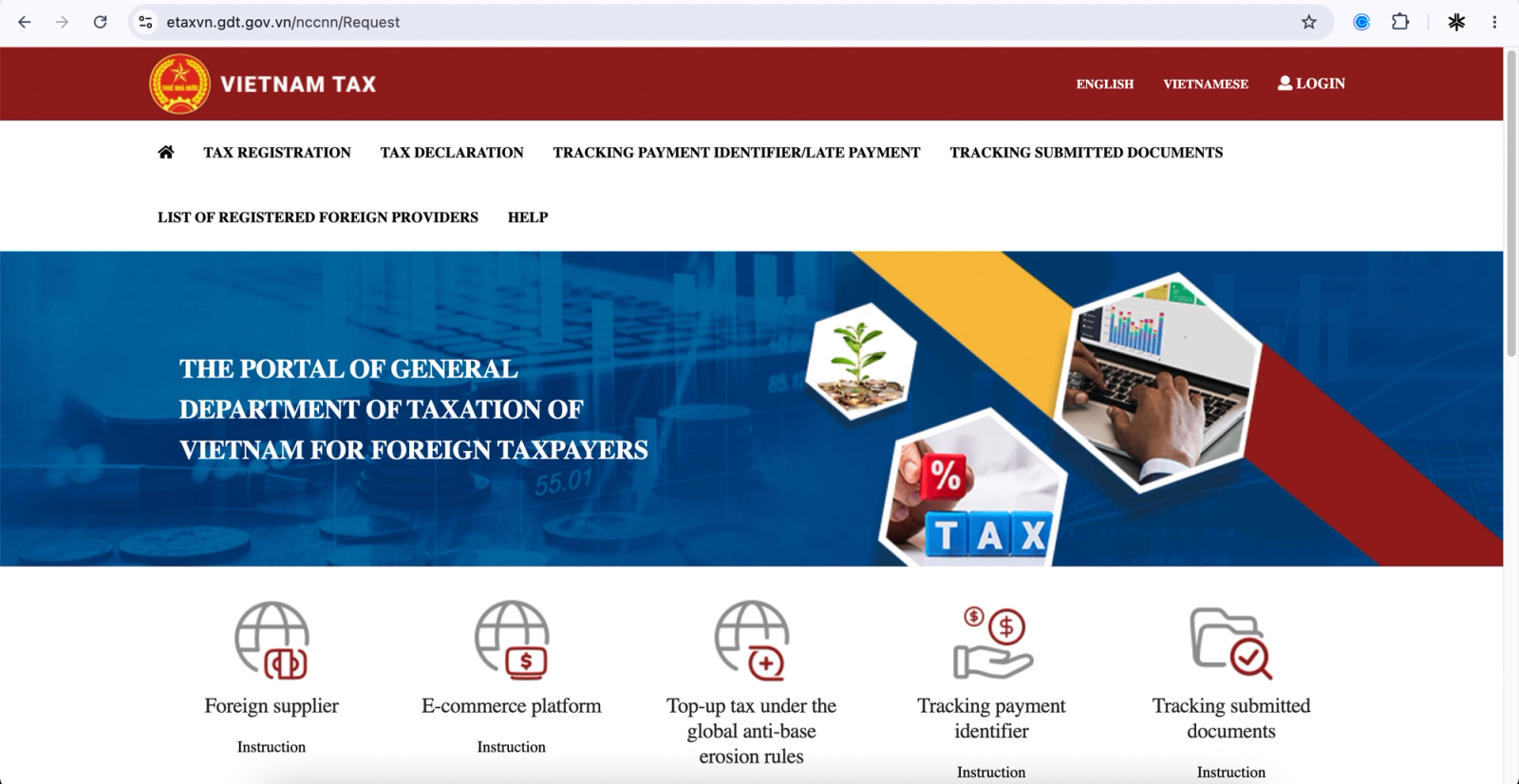
Note: the portal banner still uses the agency's former name, General Department of Taxation. Since 1 March 2025 it has been the Tax Department under the Ministry of Finance.
This is the portal whose name can easily confuse foreign business owners.
Seeing “Foreign Supplier Portal,” you might assume that any foreign-owned company operating in Vietnam should use it. That is not the case.
The portal was created for qualifying foreign suppliers conducting business with or generating income from Vietnam, particularly foreign businesses without a permanent establishment in Vietnam that need to register, declare and pay Vietnamese tax directly online.
Think of an overseas digital platform or service provider selling into the Vietnamese market without setting up a local Vietnamese company. That is much closer to the type of taxpayer this portal was designed for.
If you establish a Vietnamese limited liability company that happens to be 100 percent foreign-owned, your company is still a locally registered Vietnamese taxpayer. You would normally interact with Vietnam's domestic tax systems rather than automatically using the foreign supplier portal simply because the shareholders are foreigners.
This distinction is worth getting right. “Foreign-owned company in Vietnam” and “foreign supplier to Vietnam” are two very different tax situations.
So which portals should you actually bookmark?
If you are an expat employee or an individual earning income in Vietnam, the eTax ecosystem, including eTax Mobile, plus the taxpayer information lookup tools are likely to be the most relevant.
If you run a locally incorporated small business or foreign-invested company in Vietnam, you will most commonly encounter the Tax Administrative Procedures Portal, eTax and the Electronic Invoice Portal.
If you operate as an individual or household business, the Business Tax Support Portal is useful for understanding your obligations, while the other tax systems handle the actual procedures.
And if your company is overseas and sells services directly into Vietnam without establishing a local entity, the Foreign Supplier Tax Portal may become relevant.
The important thing is not to memorize six government websites. It is to understand that Vietnam's online tax system is divided by function.
One practical habit that can save a lot of trouble
Whenever somebody sends you a tax portal link, look at the domain before entering your tax ID, password, company information or payment details.
The official systems covered in this guide use the gdt.gov.vn government domain.
Tax compliance increasingly happens online, which is convenient, but that also means business owners should know which government systems their accountants, employees or service providers are using on their behalf.
You do not need to become your own accountant. But if you own a business, understanding where your tax returns go, where your invoices are recorded and where you can independently check taxpayer information gives you much better visibility over your own company.
And when the question becomes more complicated, such as determining whether you are a Vietnam tax resident, handling several sources of income, operating a foreign-invested company or deciding whether foreign supplier tax rules apply, that is where professional advice becomes more valuable than another afternoon of clicking through government portals.
For guidance specific to your situation, you can find legal, accounting and tax professionals in Vietnam through Easytiger.vn.
This article is for general informational purposes only and does not constitute tax, accounting or legal advice. Vietnam's digital tax systems and procedures continue to evolve. Portal functions and links were checked against Tax Department and legal reference information available as of August, 2026.
Frequently asked questions


Easytiger Match
Find the right professional
- Tell us what you need
- We shortlist professional(s) and introduce them to you